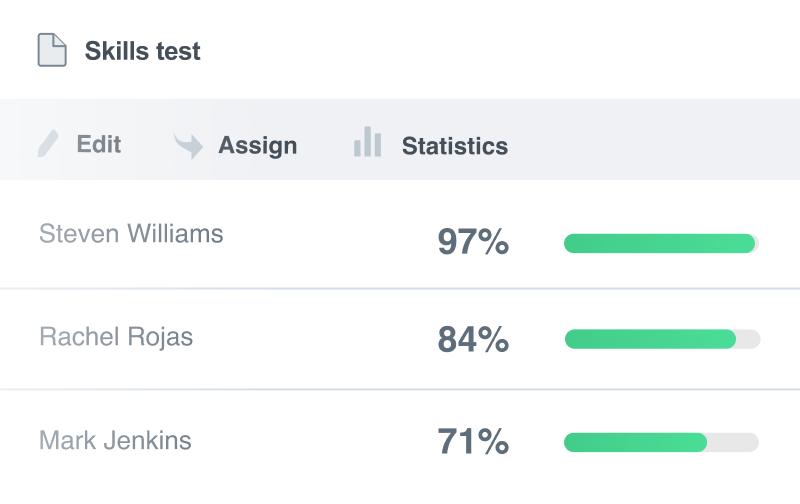
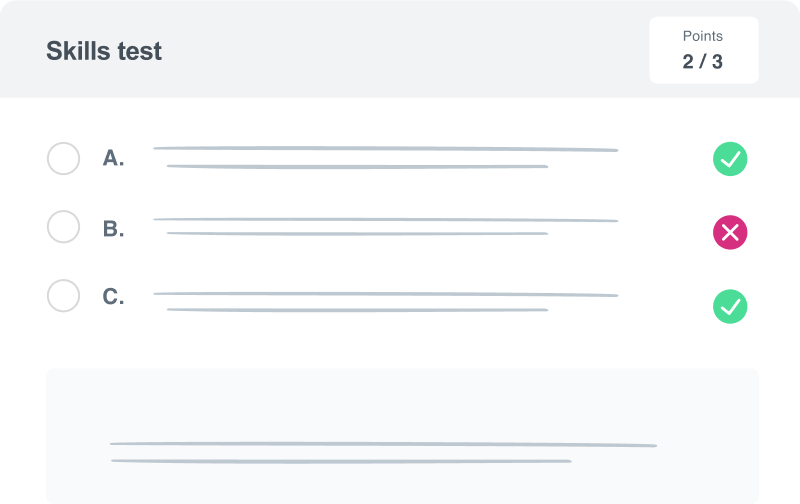
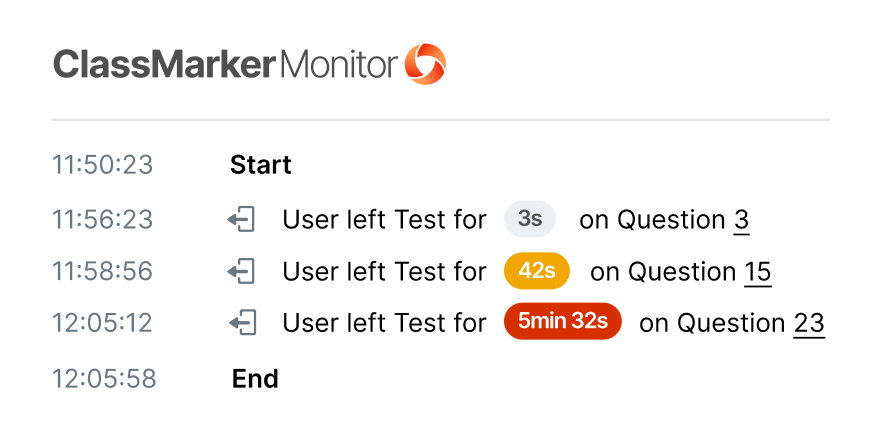
ClassMarker is a secure, professional, & easy-to-use Exam maker. Our customizable online testing solution is designed for business, training, and educational assessments, with tests graded instantly—Saving you hours of paperwork!
Register now8 steps to create online tests:
Create online exams effortlessly. Our short videos will teach you how to create and give online exams in minutes.
When giving online exams, your Test takers will love how simple it is to take exams with ClassMarker. Try demonstration exams.
The 1809 kernel remains a vital piece of software history. It balances the need for modern security features with the rigorous stability requirements of the enterprise world. Whether you are managing a fleet of workstations or maintaining industrial IoT devices, understanding the nuances of build 17763 is essential for ensuring long-term system health and performance.
This feature is designed to protect a system against using Thunderbolt 3 devices.
: Switching the default system timer to TSC (Time Stamp Counter) and disabling the Fault Tolerant Heap to reduce processing delays.
One of the most critical kernel changes in 1809 was the refinement of the scheduler to better handle heterogeneous System on Chips (SoCs). This was particularly relevant for Intel’s upcoming "Lakefield" processors and ARM-based devices.
| Metric | Build 17763.1 | Build 17763.737 (KB4512578) | Delta | |--------|---------------|-----------------------------|-------| | Kernel boot time (ntoskrnl load) | 1.2 sec | 1.4 sec | +16.7% | | System call throughput (syscall/s) | 12.4M | 11.8M | -4.8% | | Handle table lookup latency | 98 ns | 112 ns | +14.2% | | Memory manager (page fault service) | 4.3 µs | 4.5 µs | +4.6% |
The Kernel OS 1809.13 is a significant release in the evolution of operating systems, embodying a blend of performance, security, and user-centric features. This paper provides a comprehensive overview of the Kernel OS 1809.13, focusing on its architectural design, key features, and applications across various domains. We delve into its development background, core components, and highlight its improvements over predecessors. The analysis extends to its impact on computing, highlighting both achievements and areas for future enhancements.
The 1809 kernel remains a vital piece of software history. It balances the need for modern security features with the rigorous stability requirements of the enterprise world. Whether you are managing a fleet of workstations or maintaining industrial IoT devices, understanding the nuances of build 17763 is essential for ensuring long-term system health and performance.
This feature is designed to protect a system against using Thunderbolt 3 devices.
: Switching the default system timer to TSC (Time Stamp Counter) and disabling the Fault Tolerant Heap to reduce processing delays.
One of the most critical kernel changes in 1809 was the refinement of the scheduler to better handle heterogeneous System on Chips (SoCs). This was particularly relevant for Intel’s upcoming "Lakefield" processors and ARM-based devices.
| Metric | Build 17763.1 | Build 17763.737 (KB4512578) | Delta | |--------|---------------|-----------------------------|-------| | Kernel boot time (ntoskrnl load) | 1.2 sec | 1.4 sec | +16.7% | | System call throughput (syscall/s) | 12.4M | 11.8M | -4.8% | | Handle table lookup latency | 98 ns | 112 ns | +14.2% | | Memory manager (page fault service) | 4.3 µs | 4.5 µs | +4.6% |
The Kernel OS 1809.13 is a significant release in the evolution of operating systems, embodying a blend of performance, security, and user-centric features. This paper provides a comprehensive overview of the Kernel OS 1809.13, focusing on its architectural design, key features, and applications across various domains. We delve into its development background, core components, and highlight its improvements over predecessors. The analysis extends to its impact on computing, highlighting both achievements and areas for future enhancements.